
The tracheostomy cuff is one of the most misunderstood parts of trach care. In over 10 years of interviewing and training home care nurses, we have found that 99% get the same question wrong: what keeps the tube in when the patient coughs hard?
Most answer “the balloon”. It is a natural guess, but it is wrong, and it can put your parent at risk. Here is what the cuff really does, what holds the tube in, and the daily checks every family should know.
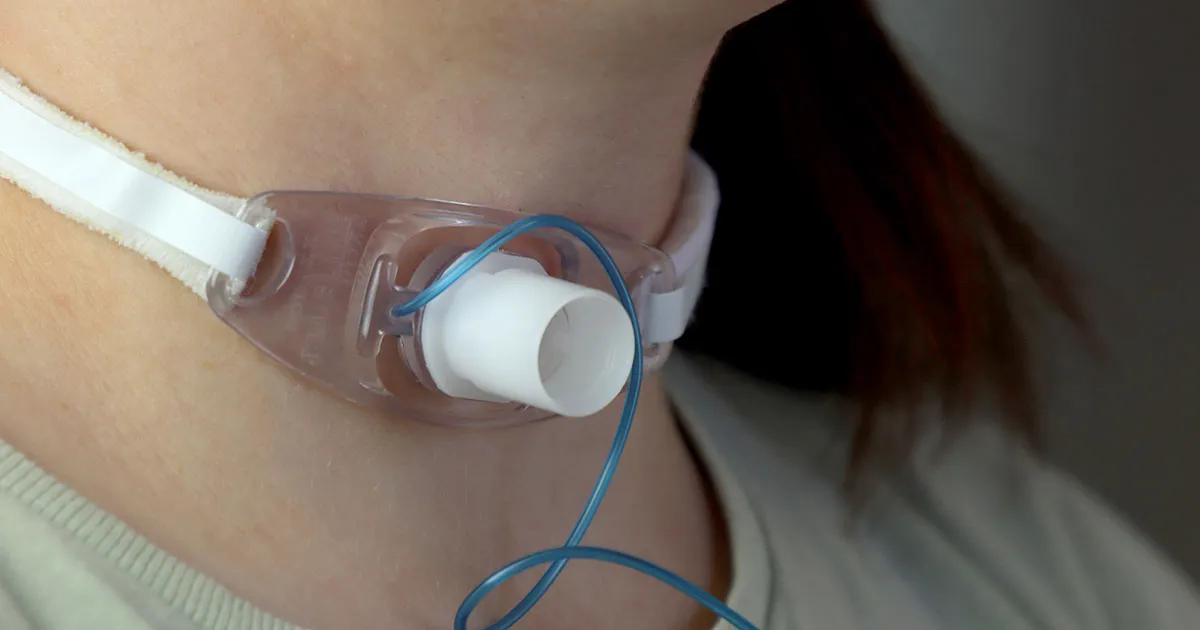
What a Tracheostomy Cuff Actually Does
A tracheostomy tube is a curved tube that sits in the windpipe (trachea), through an opening in the neck called a stoma. Some tubes have a cuff: a soft balloon near the tip, inside the windpipe.
The cuff is filled through a thin line ending in a small outside balloon, the pilot balloon. It is only a rough guide and does not show the pressure.
When inflated, the cuff seals the gap between the tube and the windpipe wall. As a result, it does two jobs:
- It directs air from a ventilator into the lungs, instead of letting it leak up and out through the mouth.
- It reduces how much saliva and secretions from above slip down into the lungs, which matters for preventing aspiration pneumonia.
In fact, nursing clinical skills textbooks describe the cuff as a seal that stops air leaks and aspiration. Notice what is missing: the cuff is a seal, not an anchor. Many people at home have an uncuffed tube, or a cuff that stays deflated most of the day. Their tubes stay in because of something else.
What Really Keeps the Trach Tube in Place
Two parts hold the tube in: the flange and the ties.
- The flange (neck plate): the flat plastic wings at the front of the tube. It sits against the neck and stops the tube slipping deeper into the windpipe.
- The ties or tube holder: cotton tapes or a padded Velcro holder, threaded through the flange and fastened around the neck. They stop the tube coming out.
Guides such as Clinical Procedures for Safer Patient Care are clear that the ties are what prevent the tube coming out by accident. That is why the ties must be fastened securely at all times.
Why the cuff cannot be trusted in a cough
A strong cough pushes the tube outwards with real force. The cuff is soft and presses only gently on the windpipe wall. Therefore, it cannot hold the tube against that force.
Also, cuffs can lose air or burst without warning. If loose ties are the only backup, one coughing fit can move the tube out of the windpipe. This is called accidental decannulation. It is an emergency, because the stoma can narrow or close quickly.
Put simply: if the cuff kept tubes in, uncuffed tubes would come out every time someone coughed. They don’t, because the ties do the work.
How to Check Trach Ties Every Day
These tips support hands-on training; they do not replace it. Before doing any trach care, carers should be trained at the bedside by a nurse.
What you need
- Good light and clean, washed hands
- Spare ties or a spare holder, of the type your treating team uses
- The emergency trach kit within reach: a spare tube of the same size and one size smaller, the obturator (the guide used to insert the tube), scissors, and a syringe if the tube has a cuff
Step-by-step tie check
- Look at the flange. It should sit flat and central against the neck, with the tube pointing straight in.
- Slide one finger under the ties at the side of the neck. One finger should fit snugly, and no more. Follow your treating team if they advise differently.
- Check the ties for dampness, fraying or worn Velcro. In Dubai’s summer heat, sweat can soak cotton ties. Damp ties irritate the skin, so change them as your nurse has shown you.
- Recheck the ties after every coughing fit, turn, wash or transfer. These are the moments when ties loosen.
- Never change ties alone. One trained person holds the tube by the flange while the other changes the ties. Where your team teaches it, secure the new ties before removing the old ones.
If your parent is restless or confused and pulls at the tube, tell the nurse. Restlessness raises the risk of the tube coming out.
Why Over-Inflating the Tracheostomy Cuff Is Dangerous
Because of the myth, some carers add extra air “to be safe” before a coughing fit. This does not make the tube more secure, and it can cause harm.
A cuff that is too full presses hard on the soft lining of the windpipe. Over time, this can reduce blood flow to the lining, causing damage, scarring and narrowing. Get a doctors order for the right pressure for your patient
For this reason, cuff pressure is checked with a special gauge called a cuff manometer. Guidelines aim for the lowest pressure that still seals the airway, often around 20–30 cmH₂O. Your parent’s target is set by the treating team. Never add or remove air from the cuff unless they have trained you to.
When to Call a Nurse or Doctor
Call 998 or the doctor immediately if your parent has any of these signs:
- Difficulty breathing, noisy breathing or sudden distress
- The tube has come out, or looks longer than usual, as if partly out
- The flange is no longer flat against the neck
- Air or voice suddenly coming from the mouth while the cuff should be inflated
- A suction catheter will not pass down the tube
- Blue or grey lips, or a drop in oxygen on the monitor
Call your nurse soon if the ties are wet or worn, the skin under them is red or sore, the pilot balloon looks flat, or you are unsure how much air should be in the cuff.
Hospital at Home: How Our Nurses Are Trained in Trach Care
This myth is not a failing of nurses. It is often how the cuff is taught. That is why we ask about it at interview, and correct it in training.
Every Enayati nurse completes over 200 hours of training, in a programme developed by Dr. Clark, who has 30 years in healthcare education. We also operate to over 302 CARF international standards.
Our nurses can also show families and home helpers trach care hands-on, at the bedside. Learn more about our home care services in Dubai and home nursing in Dubai, or read our guide to PEG tube and tracheostomy care at home.
Tracheostomy Cuff FAQs
Does the tracheostomy cuff hold the tube in place?
No. The tracheostomy cuff seals the windpipe, so air goes to the lungs and fewer secretions slip down. The flange and the ties hold the tube in. That is why the ties must be fastened securely at all times, and checked after coughing, turning or washing.
Should the cuff be inflated or deflated at home?
It depends on your parent. People on a ventilator, or at high risk of aspiration, may need the cuff inflated. Others have it deflated, or have an uncuffed tube. The treating team decides, and nobody should change it without their instruction and hands-on training.
How tight should trach ties be?
Most guidelines say one finger should fit snugly between the ties and the neck. Too loose, and the tube can move or come out with a cough. Too tight, and the ties can rub the skin or press on the neck. Always follow your treating team’s advice.
What happens if a tracheostomy cuff is over-inflated?
Too much air presses hard on the lining of the windpipe and can damage it over time, sometimes causing scarring and narrowing. So cuff pressure should be checked with a cuff manometer by someone trained, aiming for the lowest pressure that still seals the airway.
What should I do if the trach tube comes out?
Treat it as an emergency. Call 998 or the doctor immediately, and follow the emergency plan your treating team gave you. Keep the emergency kit, with a spare tube of the same size and one size smaller, at the bedside at all times.
Can my parent talk with the cuff inflated?
Usually not. An inflated cuff stops air passing up through the voice box, so speaking is not possible. Speaking valves are used only with the cuff fully deflated, as planned by the treating team and a speech therapist. Never place a speaking valve on an inflated cuff.
The tracheostomy cuff is a seal, not an anchor. What keeps your parent safe during a hard cough is a well-fitted flange, secure ties, and a carer who checks them often.
For more nursing tips, see our guides to PEG feeding position, blocked PEG tubes and PEG tube site care.
If you are unsure about your parent’s trach care, or would like a nurse to train your family at home, please WhatsApp us on +971 55 352 0186 to speak to a nurse.