
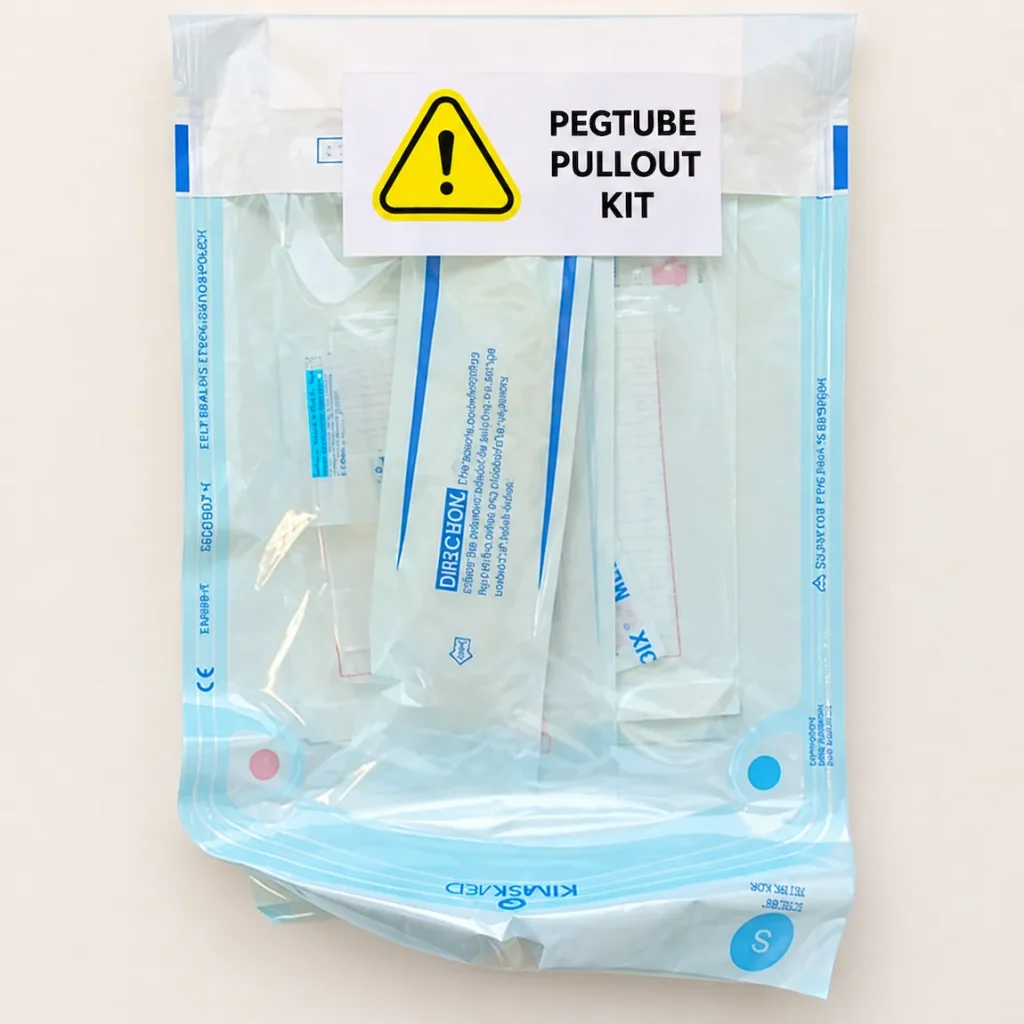
A PEG tube pulled out at home often happens at night, and it can go unnoticed for hours while the feeding pump keeps running. This guide is for families, carers and nurses who look after an adult with a PEG tube.
It explains how to prevent it, how to be ready before it happens, and what to do if it happens on your watch. Our home nursing in Dubai team trains families, carers and home helpers in these steps hands-on.
Please note: this guide is for adults with a PEG tube; children’s tubes are different. Always follow your treating doctor’s guidance and your organisation’s policies. Never insert anything into the stoma unless you have been trained, your competency has been checked, and the doctor has told you to.
Check the Tube, Not Just the Pump
A pump that is running, clicking and emptying the bag does not prove the milk is reaching the stomach. If the tube has come out, the feed may be soaking the bed sheets instead.
So look under the blankets and check two things: the connection between the feeding line and the tube, and that the tube is still in place in the stomach. Many patients have a rest from feeding between midnight and 6 a.m. During that time, carers can still check the tube every hour, gently, without waking the patient.
A few habits also lower the risk:
- Keep the outer disc in place. ESPEN advises a small gap of about 0.5 to 1 cm between the skin and the outer disc (bolster).
- Tape the tube with a small loop, so a tug doesn’t pull on the stoma.
- Keep it covered with a soft tummy binder or loose vest, so a confused hand is less likely to find it.
- Plan every turn and transfer. Check where the tube and feeding line are first.
- Check balloon tubes weekly. ESPEN suggests checking the water in the balloon every week. Please consult the doctor that inserted the PEG tube. It depends on the device itself. Not all PEG devices are the same.
Why a PEG Tube Pulled Out or Fell Out
In our nurses’ experience, there are three common reasons:
- The balloon deflated. This can happen even with a new tube, because the balloon itself can fail. So a newer tube is not automatically safer. We take the tube back to the hospital doctor who inserted it, so they can check the product’s lot number and see whether other patients’ tubes have failed too.
- Pressure built up inside the tummy. Constipation, a bowel obstruction, trapped gas, or the muscle rigidity seen in conditions such as Parkinson’s can raise the pressure and push a tube out, especially an older one.
- A tug. A patient with stiff or spastic limbs may slowly move an arm in their sleep. Sometimes the smallest tug is enough. A confused patient may also pull at the tube.
Be Ready Before It Happens
At 2 in the morning, there is no time to look for supplies. That’s why every patient with a PEG tube needs an emergency plan, agreed with the doctor, before it is needed.
At Enayati, we keep a sterile emergency kit at the bedside. A trained nurse can use it to keep the stoma open until a doctor places a new tube. We cover this in our nurses’ induction training.
If you don’t have a professional home nursing team, ask the hospital doctor before you go home. Organisations caring for PEG patients should also set their own written policy, training and audits for this situation.
Questions to ask your doctor
- What type and size is the tube, when was it placed, and when is it due to be changed?
- If the tube comes out, who do we call, day and night?
- Should we keep an emergency kit at the bedside, and who is trained to use it?
- Which medicines or feeds can’t be missed, for example insulin or fluids, if the tube is out for some hours?
PEG Tube Pulled Out: What to Do Next
- Stay calm. Stop the feed and any medicines going through the tube, and note the time.
- Don’t put the tube that came out back in. It is no longer clean and can carry infection. Keep it in a clean bag for the doctor to see.
- If you are trained and your doctor’s plan allows it, keep the stoma open with the sterile catheter from the emergency kit. It goes in only a short way, and nothing is given through it. If you are not trained, cover the stoma with a clean, dry dressing.
- Call the doctor immediately for support and instructions.
- Let the doctor decide when and where the new tube is placed. Replacing a PEG tube is always done by a physician.
- While you wait, watch for pain, bleeding, fever, vomiting or breathing difficulty.
One important exception: if the tube was placed less than four weeks ago, the track may not have healed. The ESPEN guideline treats this as an emergency, so don’t insert anything, and contact the hospital team straight away.
Why keeping the stoma open matters
The stoma can start to close within a few hours. If it closes, the patient may need another endoscopy, often with sedation or anaesthesia, to place a new tube. If it stays open, a doctor can usually place a new tube quickly. The older the stoma, the easier it is to keep open.
A real case from our nurses
One of our home care patients was admitted to hospital, and our nurse stayed with him at the bedside in intensive care. During a routine turn, the tube was tugged slightly and came out of the stomach. Our nurse opened a sterile catheter, placed it gently into the stoma and kept the opening safe until the doctor arrived. The doctor’s first words were “well done”. A new tube went in without a trip to the endoscopy unit.
How Home Nursing Helps Families Manage a PEG Tube
Our nurses follow the ASPEN and ESPEN guidelines on tube management, along with gastroenterology guidance on tube displacement. The ESPEN guideline on home enteral nutrition is a good place to start if your organisation is writing its own policy.
We train families and home helpers in your own home, using simulation models, as described in PEG tube and tracheostomy care at home. A nurse can also check how the tube is secured, review the safe PEG feeding position, and agree a written plan for what to do if the tube comes out. If your parent has dementia, our dementia care at home team can help with the confusion behind the pulling.
PEG Tube Pulled Out: Questions Families Ask
PEG tube pulled out at home: what should I do?
Stop the feed, note the time, and don’t put the old tube back in. If you are trained and it is part of your doctor’s plan, keep the stoma open with a sterile catheter from the emergency kit; otherwise cover it with a clean, dry dressing. Then call the doctor immediately for instructions.
Can I put the old PEG tube back in?
No. Once it has come out, it is no longer clean and can carry infection into the stomach. Keep it in a clean bag so the doctor can see the type and size, and the hospital can check its lot number if the balloon failed. A new tube is always placed by a physician.
Why didn’t we notice the tube had come out?
Because the pump keeps running whether or not the tube is in the stomach. The clicking sound only means the pump is working. Check the connection and the tube under the blankets regularly, including gentle hourly checks at night, and look for wet bed sheets.
How quickly does the PEG opening close?
The stoma can start to close within a few hours, which is why acting quickly matters. A trained nurse can keep it open until the doctor in the hospital places a new tube. If the tube was placed less than four weeks ago, treat it as an emergency and contact the hospital team straight away.
A PEG tube pulled out can happen to any patient, even with the best care. Checking the tube, not just the pump, and having a plan and a kit ready turns a frightening night into a few calm, practised steps.
If you’re caring for someone with a feeding tube in Dubai, our nurses can help. Please WhatsApp us on +971 55 352 0186 to speak to a nurse.